Termination Types
A termination is where the conductors (wires) are attached to the contacts of the connector. The termination must firmly join the wire to the contact and cannot loosen over time. Loose terminations will cause heat rise when current flows, which can damage the connector and result in a dangerous situation.
TERMINATION TYPES:
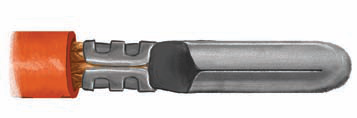
Crimp:
In a crimp connection, the wire is inserted into a tube formed at the end of the male or female contact. A tool compresses the tube onto the wire and, provided the proper tool is used, results in a very tight connection that will not loosen over time. A disadvantage of crimp connections is that they cannot be reused, unlike solder or pressure.
Solder:
A solder connection is made by melting metal (silver based) to join the wire to the contact. The molten metal fills the gaps between the wire and the contact, making a strong connection. The solder connection can break if stressed which can result in heat rise. The contacts are reusable, however it requires melting the original connection.
Pressure:
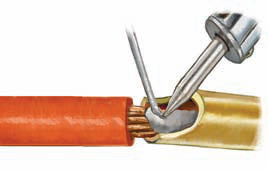
With a pressure connection, a wire is inserted into the end of the contact and a threaded screw bears down directly onto the wire. This provides a high pressure, non-loosening termination. The potential exists for the screw to break the strands of the conductor, unless the screw has a spinning washer to prevent this. It is advisable to add a separate wire shoe or sleeve known as a ferrule to the conductor before tightening to protect the individual strands of the wire.
Screw:
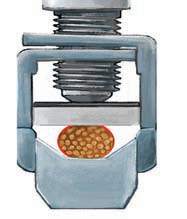
A screw terminal (used on NEMA wiring devices) involves inserting a wire through an opening between two plates. The two plates are drawn together using a screw clamping the wire and making the termination. Screw terminals are convenient for field installation and repair. However, a two plate arrangement can allow fine stranded wire to shift allowing the screw to loosen in a phenomenon known as ‘creep’. The loose screw can lead to heat rise and device failure.
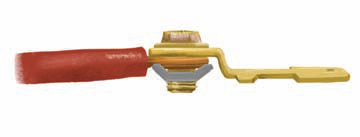
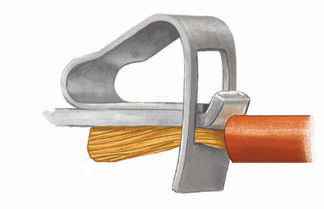
Cage Clamp:
A cage clamp termination consists of a stamped metal spring with an opening. A lever moves the spring to allow the wire into the opening. With the wire in place the lever is released, the clamp tightens and a high pressure, non-loosening termination results. Cage clamp terminations are effective, convenient, and non-loosening.